Is Coronavirus Transmitted Through Mosquito Bites?

Mosquito bites do not transmit COVID-19 in Knoxville TN and worldwide. Learn more from Russell's Pest Control.

Here at Russell’s Pest Control, we understand how uncertain times are right now, and how our communities are being affected. We are closely monitoring the COVID-19 situation to stay up-to-date with the latest information. Now and always, our focus remains to be our dedication to the safety and health of our neighbors here in Knoxville TN. With news about the nature of the virus being updated constantly, there are still endless questions about how it is spread. Currently, there is no evidence or proof to suggest that mosquitoes and ticks transmit coronaviruses. Although these insects responsible for some of the world’s worst diseases with their bites, COVID-19 is thankfully not one of them.

In the following post, we will explore on the differences between vector-borne diseases and COVID-19 to help dispel common myths about transmission.

Are Mosquito Bites Transmitting COVID-19?

To date, there is no scientific evidence that mosquitoes and ticks transmit COVID-19. Coronavirus is a respiratory virus that, to date, is spread through person-to-person contact.  COVID-19 spreads through droplets from saliva or nasal discharge, often generated when an infected person sneezes or coughs. It can also be transmitted via contact with a contaminated surface and is increasingly considered to be an airborne virus. From what we know, coronaviruses are best avoided by avoiding exposure with infected persons. Studies have shown that COVID-19 may be spread by asymptomatic people, making social distancing a must. Diseases spread by mosquitoes and ticks are entirely different.

Diseases Transmitted by Mosquitoes and Ticks

Ticks, fleas, and mosquitoes are considered vectors. But what are vectors? Vector pests are organisms that transmit diseases to humans through bites. Ticks and mosquitoes are feared worldwide for their roles in the transmission of dangerous diseases over the past decades:

  • Mosquitoes are are able to transmit some of the most deadly diseases, including malaria, Zika virus, West Nile virus, chikungunya, yellow fever, and more.
  • Ticks are most known for their ability to spread Lyme disease, which is currently the most common vector-borne disease in the United States.
  • If these vector pests feeds off a diseased host, they can transmit pathogens that can infect other hosts it subsequently bites. This is how humans get these diseases.

Mosquito Prevention During a Pandemic

Mosquitoes may be feared for their transmission of diseases, but to date, COVID-19 is not one of them. Here at Russell’s, we understand mosquitoes are still a threat. As always, it’s important to take caution in the presence of pests and to always enlist the help of a professional exterminator to prevent dangerous insects. Our team continues to provide essential pest control services to our communities during these trying times.

As the COVID-19 situation continues to unfold, we encourage our customers to seek more information and follow guidelines released by the WHO and the CDC.

Are You Prepared for Pests This Spring?

Prevent spring pests by spring cleaning your Knoxville TN home! Learn more from Russell's Pest Control.

Pest problems are a fact of life in Knoxville TN all year long. However, springtime sees an influx in pest problems every year. Do you get excited about warmer temperatures? Unfortunately, so do pests! Many types of pests and bugs that may have been less active in the winter months become more and more present this time of year. Since so many property owners already have spring cleaning plans in place, it’s the perfect opportunity to implement pest prevention measures into the mix. Keep reading for expert tips from the professionals at Russell’s Pest Control.

What Spring Pests Do You Need to Worry About?

Many of the below pests may be a nuisance all year long, but they’re especially troublesome in the spring. Even worse, this is just the beginning of pest season, meaning the problems will get worse and worse through the summer and even the fall! Some of the most common pests we get called about this time of year include:

  1. Ants
  2. Termites
  3. Rodents
  4. Stinging insects
  5. Stink bugs
  6. Flies

What Can You Do to Prevent Spring Pests?

‘Tis the season for spring cleaning. Why not implement pest control measures while you’re at it? Some of our tips to prevent pests from finding your home the ideal place to infest include:

  • Thoroughly cleaning your windows and doors. Seal any cracks or crevices.
  • Deep-cleaning your carpets and rugs. Vacuum, shampoo, or even steam-clean the surface.
  • Sanitizing and cleaning your kitchen with a focus on your appliances. Crumbs and spilled liquids will welcome all sorts of bugs and pests.
  • Removing debris from your yard, and trimming any shrubs or tree branches away from your home. Clear out your gutters and downspouts.
  • Keeping a tidy home at all times. Clean under furniture, wipe down surfaces, and inspect areas of your home that need some fixing up.

Year-Round Pest Prevention

Pests aren’t just a problem in the springtime, unfortunately. Here in Tennessee, pests can cause property owners a lot of frustration all year long. If you need help safeguarding your home against the threat of pests, the exterminators at Russell’s are here to help!

What’s The Difference Between Termites & Carpenter Ants?

Wondering if you have Termites or Carpenter Ants in Knoxville TN? Learn more from Russell's Pest Control!

Although they are both wood-destroying insects, termites and carpenter ants are different in several ways. They may look quite similar as swarmers, and both cause a lot of structural damage, so how do you tell them apart? The easiest way to tell them apart is by their appearance. Termites are responsible for the most destructive pest infestations across the nation, and are dangerous for being silent destroyers, making it important to know what pest you are dealing with.

Keep reading for expert info from the experts at Russell’s Pest Control!

Appearance of a Termite vs. a Carpenter Ant

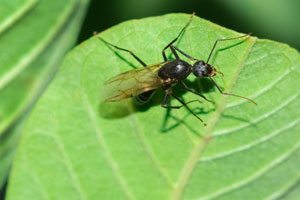
When they are swarmers, these two insects can look alike. However, there a few key differences to tell them apart:

  1. Carpenter ant swarmers
    • Black in color, with an occasional red tint.
    • Measure 1/2″–5/8″ with antenna bent at a 45-degree angle. Carpenter ants are by far the biggest ant species in the nation.
    • Wings are translucent with a reddish brown hue, laying over the posterior of the ant.
  2. Termite swarmers
    • Very dark brown to black in color, and measure 3/8″ long (including the wings).
    • Wings are a translucent to slightly milky or smoky color.
    • Their wings may overlap, and are typically as long as or slightly longer than the body. This helps differentiate them from carpenter ants.
Winged ant vs termite in Knoxville TN - Russell's Pest Control

Habits of Wood-Destroying Insects

Both carpenter ants and termites can destroy wood. Carpenter ants establish nests in wood that is already in decay, and later expand into sound wood, insulation, or wall voids. When you notice the damaged wood, the galleries they excavate appear to have been sanded. Typically, carpenter ant damage does not amount to the potential damage of a termite infestation.

Termites find their way into a structure around basement windows, doorways, porches, or any other area of the property in contact with soil. Grown colonies can range from 60,000 to over a million workers and can consume nearly 5 grams of wood per day. Needless to say, termites are considerably more dangerous than carpenter ants just by how quickly they can spread!

Termite vs. Carpenter Ant: How to Get Rid of Them

If you notice the signs of either of these insects inside or outside your property, it’s crucial to enlist the help of the experts at Russell’s Pest Control. We have a unique knowledge of the pest problems in Knoxville TN and can keep you safe from wood-destroying insects all year long. Contact our termite exterminators today!

What Are These Weird Looking Beetles In My Cereal?  

saw toothed grain beetle identification in Knoxville TN.

With fall arriving and colder weather with it, we don’t anticipate finding insects in our homes anymore, especially beetles in our cereal!  Summer is the season for insects, and many people believe that the chill of winter eliminates most insect problems. However, this simply isn’t true. Pantry pests, like the saw-toothed grain beetle, commonly invade homes in fall and winter.

What are saw-toothed grain beetles?

No one wants to find insects in their pantry items, but if you do find bugs in your cereal, understanding how to identify what pest infestation you’re dealing with is important. Saw-toothed grain beetles are small brown beetles with long flattened bodies that get narrower at the tip. These small insects are pantry pests and get their name from the six saw-like protrusions on either side of their thorax.

How do saw-toothed grain beetles invade?

Saw-toothed grain beetles are most often found in stored-food products such as cereal, pasta, flour, nuts, baking mix, bread, sugar, and a wide range of other dried goods. Most infestations begin in grocery stores or food-processing facilities. If you find saw-toothed grain beetles in your home, it’s almost always because you bought an infested food item at the store by mistake. While it is more common to encounter adult saw-toothed grain beetles in your home, it is actually the larva that does most of the damage. Saw-toothed grain beetles don’t bite or cause harm in any physical way. Instead, these insects cause problems by contaminating food items with their bodies, eggs, and larvae.

Pantry Pest Prevention Tips

There are many prevention tips you can try that will reduce your risk for an infestation, but prevention tips will never be as effective as professional pest control. To keep saw-toothed grain beetles and other pantry pests out of your home this fall, follow these helpful pantry pest prevention tips from the National Pest Management Association (NPMA):

  1. Inspect dried goods before purchasing. If a bag or box has small holes, it could mean that saw-toothed grain beetles have already gotten inside.
  2. Inspect the interior bagged food items themselves once you arrive home. If there are signs of larva or eggs inside, throw the infested product away.
  3. Store pasta, flour, and other dry foods in hard plastic or glass containers that can’t be chewed through.
  4. Only purchase items that show no sign of damage.
  5. Check expiration dates on baking ingredients before use.
  6. Keep kitchen counters, floors, and sinks clean because crumbs and spills quickly attract pests.
  7. Dispose of garbage regularly in sealed receptacles.
  8. Seal cracks or holes around the stovepipes and water pipes.
  9. Eliminate all moisture sites, including leaking pipes and clogged drains.

If an infestation has already occurred, you shouldn’t try to handle it alone. Pantry pest problems can get out of hand quickly if they aren’t dealt with right away. It is recommended to contact a pest professional if a pantry pest infestation is suspected.